
Benfites Of Digital Marketing
"Digital marketing offers cost-effective, targeted outreach to a global audience, ensuring better ROI. It enables real-time analytics and personalized engagement, enhancing brand visibility and customer connections.........
12/26/20245 min read
Benefits of Digital Marketing
Digital marketing gives schools, colleges, universities, and training institutes an edge over traditional methods. Educational institutions can reach their prospective students, parents, alumni, and other interested stakeholders effectively. Below are the major benefits of digital marketing for educational institutes:
1. Wider Reach and Increased Visibility
Digital Marketing brings an educational institution by being in a position to reach a wider audience as opposed to the conventional word of mouth and advertisements being channeled only to local or regional areas. Digital has opened schools, colleges, and universities internationally to prospective students and their families. It could be through social media, SEO, or paid ads. Digital marketing keeps institutions' presence and visibility beyond all physical locations.
2. Cost-Effective Marketing
Many education institutions are small schools or universities that cannot possibly afford to budget for traditional marketing avenues, such as television or newspaper advertising. Much cheaper and much more money-efficient, digital marketing provides more value-for-money propositions. Social media marketing, search engine optimization (SEO), Email campaigns, and Pay-Per-Click (PPC) advertising deliver cost-effective alternatives to traditional methods without sacrificing the greater return-on-investment these institutions expected.




3. More admissions and better leads
To attract new students is to this end as an institution of learning very vital. This is how digital marketing works: one can include targeted paid ads and lead magnets such as downloadable brochures or application forms in landing pages to attract students, making it easier to solicit leads. Now capture information from potential students through digital marketing techniques develop these leads with email and finally - converting them into applicants or enrolled students.
4. Targeted Marketing to a Group of People
These educational institutions target specific populations through digital marketing, enabling them to reach their students in terms of location, age, interest, and education. For instance, if a special program is being offered by a college, it can also advertise on Google Ads or social media platforms to target individuals interested in that particular field of study. Personalizing these messages to send relevant ones to audiences increases the chances of getting qualified students into the nest.
5.Better Engagement with the Prospective Students and Parents
Institutes can interact with the potential students available over platforms like Facebook, Instagram, and LinkedIn directly. So the institution can update, answer the questions, and show its own culture, as well as academic programs, within the institution through social media. This interactive engagement may help create a bond and trust in the mind of the audience, which has a good impact on their decision-making process. A live chat on a website or social network can help immediately answer a query.
6. Enhanced Online Reputation Management
The importance of an institution's reputation has received much attention in this modern age. Primarily, that reputation is built online, and thus, in this age, an institution of learning should have online reputation management about reviews and testimonials and active social media engagement. An institution that actively takes care of and responds to reviews and feedback can shape its image for positive perception at the same time. Such feedback, especially positive ones from students and alumni, can cause a lot of impact on the decision-making of prospective students in making their choice after analysis on platforms such as Google Reviews and College Review Websites.
7.Measurable Results and Analytics
Digital marketing provides a very accurate mechanism of tracking and measuring the effectiveness of all campaigns. For example, with the help of Google Analytics, the educational institute can analyze website traffic, user behavior, leads being generated and conversion rates, and everything associated with them. All this data allows continuous optimization of marketing strategies for most ROI return. On the other hand, traditional marketing methods mostly have vague or even no measurable outcomes, while digital marketing gives real-time insights into campaign performance.
8. Increased Brand Awareness and Trust
Digital marketing brought the establishment into the online world and popularized it for the education sector. Through regular posts, which can be blogs, videos, and social media profiles, the institution displays its values, academic achievements, and events held on campus. An institution becomes familiar with prospective students and their families once they become very visible and active online. Content marketing, such as informational blog posts or video testimonials, expands a brand's credibility as well as positions it as an authority in the industry
9. Flexibility and Quick Adaptation
Digital marketing is very flexible and adaptable compared to traditional marketing. One can change a particular ad campaign or strategy while it is running if it is not delivering the desired result. For instance, paid advertising platforms like Facebook Ads and Google Ads refine the entire campaign according to performance metrics and use that information to move forward with campaigns that do not have a track. And digital marketing campaigns are often ramped up or down in very small time slots on the basis of changes in budget or on shifting goals.
10. Content Marketing for Student Retention
After being admitted, they should continue to engage with students. The communication that content marketing brings may thrive even during the time that they are part of the school. Edu-institutes create valuable content like newsletters, academic events, and stories about their alumni to make these students feel part of the institution. Schools may engage with students through these online channels to reach maximum retention or possibly even have students to act as referrals.
11. Mobile Accessibility
As more people use smartphones, even educational institutions are expected to have mobile-friendly websites and advertise to prospective students whose feet do the travelling. Mobile optimization means that students can always retrieve important information like course catalogs, application forms, or schedule of events from anywhere. This convenience also means that it can touch students anywhere, any time, and mark it a time-oriented way at the institution.
12. Increased Enrollment Through Virtual Tours and Webinars
Virtual campus tours and webinars are some of the current marketing features of several institutions. These take off the geographic distance barrier as they give students the opportunity to see or experience a school virtually, even when they happen to be across the other side of the world. Some virtual events provide a lot more to the students, including interactions with faculty and other students, question answering, and the kind of preparation that makes or breaks an institution from the perspective of potential students.
Conclusion
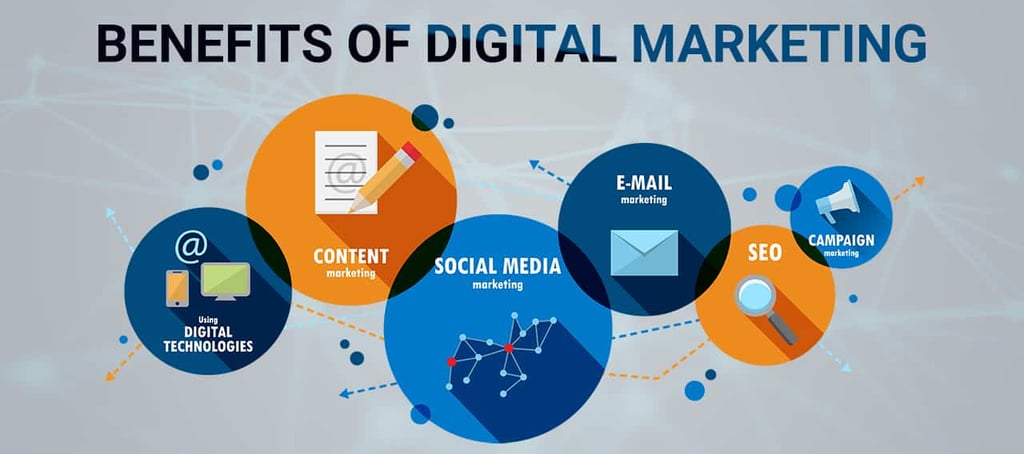
Digital marketing is compulsory in today's education system, as it directs engagement avenues for prospective students and keeps the institutions competitive in the dynamic flow of a digital-first world. Global reach, cost-effective solutions, target audience reach, and real-time digital tracking are the abundant and vast sets of advantages that digital marketing presents. A balanced digital marketing strategy—employing SEO, social media, content marketing and online reputation management—noshes up not only the vegetal sap of brand awareness but also improved student recruitment activities and beneficially worth dealings with their audience on the long-side.